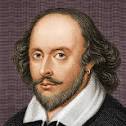
So, who really wrote all those magnificent plays that for 400 years have stood the test of time? Well, this may come as a shock to conspiracy theorists but…..wait for it….they were written by…..William Shakespeare of course. There is absolutely no evidence whatsoever of any contemporary playwright or poet having written this material themselves. To the shame of The Globe Theatre, there is a piece on the wall questioning the man’s validity as the author of his own works. Actors as distinguished as Derek Jacobi are a part of the ‘anti-Stratford’ group. Sam Wannamaker, founder of the rebuilt Globe, will be turning in his grave.
There are many unwitting contenders for the literary crown but three are more prominent than others in the realm of supposed documentary investigation…..
Francis Bacon was an extraordinarily gifted, high profile individual. Unfortunately, he is on record as personally disliking theatre as frivolous and he cannot be connected to the stage in any way. He is often cited because he was an aristocrat and it is believed that only someone with a university education could write about the range of subjects in the plays. This is class snobbery. Shakespeare had a very good grammar school education and his father was the mayor of a consequential town. In fact, he employed a multitude of phrases and words in which only a country boy – not a privileged aristocrat – would be knowledgeable.
Another contender was the Earl of Oxford, a mediocre poet and playwright (though none of the latter survive) and a favourite of Elizabeth I. Again, the notion that a well travelled aristocrat would be more likely to write a range of plays than a provincial country boy comes to the fore. The problem is, the good earl was notoriously arrogant, petulant and given to bursts of violence, at one time murdering his servant. It is impossible to believe that this wastrel could conceive of the depth of feeling that emanates from Shakespeare’s greatest works. Oxford was also incredibly vain – why would he give the world some barely passable literature then keep secret all those amazing sonnets and plays? Oh, and he died in 1604, while Shakespeare still had a decade of writing ahead of him.
The third contender – and this beggars belief – is Christopher Marlowe, certainly a talented playwright, but he died in 1593, early in Shakespeare’s career. The conspiracy theory is that he faked his own death and continued writing. Enough said, methinks.
All of this denies the incontrovertible fact that William Shakespeare was a high profile playwright and actor, with much surviving documentation to show that King James I was his royal patron, (you cannot be any more in the public eye than that) and he worked for many years with a troupe of actors who, after his death, published the first Folios of his collected works.
Additionally, all writers have an ‘idiolect’ a form of writing peculiar to that individual. At a time when the English language was evolving, this is even more pronounced. Shakespeare’s particular use of certain words is unlike any other writer of his time – he contributed enormously to common phrases and parlance used to this day – and differs appreciably to the individual styles of Bacon and Oxford.
What is it about the English and our cynical propensity to question the genius of our geniuses? The Italians don’t rip apart the credibility of Leonardo da Vinci for being not just a superb artist but also a biologist, an engineer and an inventor. The Austrians readily accept that Mozart was versatile enough to compose something with such sublime beauty and sensitivity as the Requiem yet also write Don Giovanni with its bawdy comedy – Amadeus could write for Kings or paupers.
So it was with Shakespeare. In Bill Bryson’s short but enlightening biography of the man, he concludes with an excellent essay just entitled ‘Claimants.’ To end with the venerable Mr Bryson: “It needs to be said that nearly all of the anti-Shakespeare sentiment – actually, all of it, every bit – involves manipulative scholarship or sweeping misstatements of fact….the only absence among contemporary records is not of documents connecting Shakespeare to his works, but of documents connecting any other human being to them.”
Give credit where credit’s due, that’s what I say. A
 Remember to Live